Discover how gamification in education is transforming workplace training, enhancing productivity, and boosting employee engagement.
Understanding Gamification in Education:
Gamifying education involves integrating game design elements such as points, badges, leaderboards, and interactive challenges into traditional learning environments. This approach aims to boost learner engagement and motivation by leveraging the natural human inclinations toward competition and achievement.
New to gamification? Start with our comprehensive guide to mastering gamification.
Key Elements of Gamification in Education:
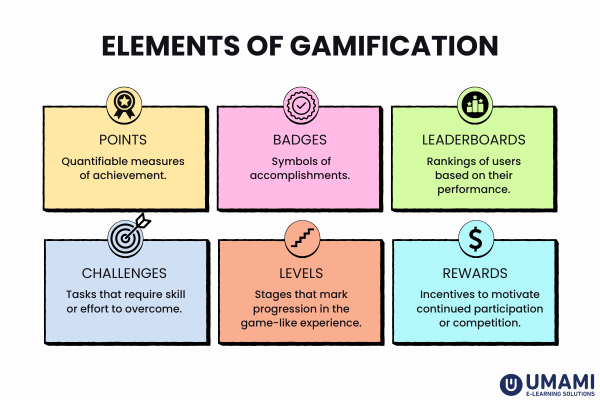
How Gamification Enhances Learning:
Increased Engagement: By making learning fun and competitive, gamification helps maintain high levels of learner interest and participation. Engaged learners are more likely to stay focused and invest time in their education.
Boosted Motivation: The rewarding system of gamification plays into the dopamine-driven feedback loops common in gaming. Learners feel a sense of accomplishment when they earn rewards, which motivates them to continue learning.
Enhanced Retention: Interactive learning environments created by gamification promote active learning, which is known to enhance knowledge retention. Learners remember information better when they actively engage with the material in a meaningful way.
Personalized Learning Experience: Gamification allows for personalized learning paths, where learners can choose challenges that match their interests or areas where they need improvement, making education more relevant to each individual.
Skill Development Through Continuous Learning:
1.Incremental Challenges:
Gamified learning platforms break down complex skills into smaller, manageable stages.
These challenges increase in difficulty as proficiency grows, allowing learners to build confidence gradually and maintain engagement by visibly tracking their progress.
2. Real-Time Feedback:
- Immediate feedback is integral to gamified systems, with employees receiving points, levels, or digital badges upon task completion.
- This feedback often includes corrective advice, establishing a direct link between action and improvement, which helps correct behaviors promptly and reinforces positive outcomes.
3. Skill Development and Career Advancement:
- Training modules are designed to develop skills crucial for employees’ current roles and future growth within the company.
- This strategic alignment of skills with organizational goals not only enhances job performance but also opens up pathways for career advancement, increasing motivation and commitment to learning.
4. Culture of Continuous Improvement and Adaptation:
- Gamification promotes an adaptive mindset and a continuous improvement culture by constantly introducing new challenges and learning opportunities.
- This dynamic approach keeps the training environment lively and prepares employees to adapt quickly to changes, fostering a proactive, resilient workforce.
Fostering Team Collaboration Through Gamified Learning
1. Group Challenges:
Gamified training platforms often feature group challenges where employees must work together to achieve common objectives. These challenges are designed not just around individual tasks but require collective problem-solving and decision-making, mimicking real-world team projects.
Group challenges encourage communication and teamwork as employees need to align their strategies and cooperate to succeed. This shared experience fosters stronger relationships and a sense of unity among team members.
2. Leaderboards:
While individual leaderboards spark personal ambition, team-based leaderboards heighten group competition, where teams compare their progress with others. This setup can foster a healthy competitive environment where teams strive to outperform each other in a constructive manner.
Leaderboards can also display team achievements and progress, providing recognition and a sense of accomplishment for collaborative efforts. This visibility enhances motivation across the team and celebrates collective success, which is essential for team morale.
3. Sense of Community and Collaboration:
By involving multiple employees in interactive and engaging learning activities, gamified training platforms help cultivate a strong sense of community. When team members engage together in learning challenges, they share both the struggle and the triumph, which can lead to deepened interpersonal connections and a more cohesive work environment.
The collaborative nature of gamified learning mirrors the collaborative needs of most modern workplaces, where teamwork and mutual support are crucial for achieving complex objectives.
4. Innovation and Creative Problem-Solving:
Group challenges within a gamified context encourage creative problem-solving by requiring diverse viewpoints and skills. When team members collaborate, they combine their unique perspectives and expertise to overcome challenges, leading to innovative solutions that may not emerge in solitary settings.
This practice of collaborative innovation through gamified learning extends into everyday work tasks, enabling teams to tackle professional challenges with enhanced creativity and efficiency.
5. Supportive Work Environment:
The interactive and supportive nature of gamified learning helps build a work culture where employees feel valued and supported. Gamification provides a platform for all team members, regardless of their role or level within the company, to contribute equally and visibly.
As employees see their and their teammates’ contributions recognized and celebrated, it reinforces the value of support and cooperation in achieving shared goals, further embedding these values into the company culture.
Boost Innovation and Creativity in the Workplace
Gamification in workplace training is not just about engagement and learning; it’s also a powerful tool for enhancing innovation and creativity among employees. By introducing game-like elements into training, employees are encouraged to think creatively and develop solutions that are both novel and effective. Here’s a brief look at how gamification fosters an environment conducive to innovative thinking:
- Creative Problem-Solving:
Gamified environments simulate real-life challenges requiring innovative solutions, encouraging employees to think outside the box. The non-punitive, game-like setting allows for risk-taking and experimentation, leading to creative breakthroughs.
- Diverse Strategies:
Gamification prompts the application of varied strategies to tackle tasks, exposing employees to different problem-solving approaches. This broadens their thinking patterns and equips them with a versatile problem-solving toolkit, enhancing their ability to innovate in their daily roles.
- Cross-Pollination of Ideas:
Team-based gamified challenges often involve participants from different functional areas, facilitating the sharing of diverse ideas and expertise. This cross-disciplinary collaboration is a hotbed for innovation, spawning solutions that might not emerge in a homogeneous group.
- Continuous Learning and Skill Enhancement:
The inherent nature of gamification involves continuous learning as players seek to improve and advance. This constant skill upgrading keeps employees at the cutting edge of new techniques and technologies, which is essential for innovation
- Motivation to Innovate:
Gamification makes achievement visible and rewarding, which not only motivates employees but also fosters a proactive, innovative mindset. This enthusiasm often translates into a continuous drive for finding new and improved ways to achieve work goals.
Learn how gamification transforms engagement and productivity in training and workplace settings.
Measuring and Recognizing Accomplishments with Gamification
Gamification transforms the traditional approach to employee training and development by integrating game mechanics that measure and recognize individual and team accomplishments. This system of tracking and rewarding helps build a more motivated and competitive workforce. Here’s a detailed look at how gamification achieves these goals:
1. Tracking Progress with Digital Tools:
Gamification leverages digital badges, points, and leaderboards to quantify and visualize progress. These tools allow both employees and managers to monitor achievements in real-time. For employees, this constant visibility serves as a motivational booster, enabling them to see the immediate impact of their efforts. For managers, these tools provide a clear overview of individual and team progress, facilitating more effective management and support.
2. Digital Badges and Achievements:
Digital badges serve as a form of recognition for completing specific tasks, mastering new skills, or achieving certain milestones. These badges are not only markers of success but also help in building an employee’s professional portfolio within the organization. They reflect a commitment to continuous improvement and personal development, qualities highly valued in any workforce.
3. Motivation and Morale Boost:
Recognition through gamification goes beyond traditional verbal or written praise, offering tangible rewards that accumulate over time. This aspect of gamification appeals to intrinsic motivators like mastery and achievement, and extrinsic motivators such as status and recognition among peers. When employees see their efforts acknowledged, their morale is boosted, enhancing job satisfaction and loyalty.
4. Fostering Healthy Competition:
Leaderboards and point systems can foster a healthy competitive environment where employees are motivated not only to meet standards but to exceed them. This competition pushes individuals to continuously improve and innovate, driving overall productivity and performance. Additionally, such competition can create a lively, dynamic workplace where achievements are openly celebrated.
5. Encouraging Broader Participation:
By recognizing not just top performers but also improvements and efforts in various forms, gamification encourages wider participation among the workforce. Employees who may not normally stand out in traditional assessment metrics can receive recognition for their progress and contribution. This inclusivity helps ensure that all team members feel valued and motivated to contribute, enhancing overall team cohesion and performance
6. Creating a Culture of Recognition:
The consistent and visible recognition that gamification promotes helps in creating a culture where every achievement, no matter how small, is acknowledged. Over time, this culture of recognition fosters a workplace where continuous improvement and excellence are the norms, not the exception.
Final thoughts
Gamifying Education goes beyond just making learning enjoyable. It’s about using gaming elements strategically to boost learning outcomes and enhance workplace performance. Our team of experienced professionals can assess your needs, provide personalized recommendations, and guide you through the process of enhancing your online learning experience.