Welcome to another edition of UMAMI E-learning-Insider, we’ll explore some of the best learning theories and how they can be used to create perfect e-learning experiences.
Let’s talk e-learning – you know, that thing that can sometimes feel like staring at a never-ending spreadsheet?
But what if your training could be engaging, effective, and even fun? That’s the power of learning theories.
Learning theories provide the framework for designing e-learning that actually sticks with your learners and helps them.
But with so many theories out there, where do you even begin? Don’t worry, UMAMI has got you covered.
Let’s get started with this simple infographic below that demonstrates the 4 main theories and their main components👇

The 1st Theory:
Behaviorism: Rewards Rule!🏆
Ever heard the saying “practice makes perfect”? That’s the core idea behind behaviorism. This theory suggests that learning happens through reinforcement – rewarding desired behaviors and gently nudging out unwanted ones.
How can you use behaviorism theory in e-learning?
You can use it by adapting 2 approaches; gamification & microlearning:
1- Gamification: Everyone loves a good game, and behaviorism tells us that games can be powerful motivators. Think points, badges, and leaderboards to keep your learners engaged and coming back for more.
Exactly like UMAMI’s game for MAJD-FOODS, focusing on customer satisfaction training. The game rewards employees for correct completion, making the training process engaging and fun.

♦ Microlearning: Break down complex topics into bite-sized chunks and reward learners for completing each step. This keeps things manageable and motivating.
The 2nd Theory:
Cognitivism: All About the Brain!🧠
Cognitivism takes a different approach. It focuses on the mental processes involved in learning such as attention, memory, and all that good stuff.
This theory tells us that e-learning needs to be designed in a way that considers how the brain works best.
The Cognitive Theory of Multimedia Learning (CTML) by Richard Mayer explains how our brains process information during multimedia instruction. It proposes a dual channel system for verbal and visual information, with limited capacity for each channel.
CTML emphasizes active processing, requiring both channels to be engaged for deeper understanding and knowledge retention.
How can you use cognitivism in e-learning?
♦ Multimedia Magic: Combine text, images, audio, and video to create a more engaging and effective learning experience. Our brains process information differently through different channels, so variety is key!
♦ Chunking & Organizing: Break down information into logical chunks and present it in a clear and organized way. This makes it easier for learners to understand and remember what they’ve learned.
The 3rd Theory:
Social Learning Theory: Learning from Others! 👥
Social learning theory tells us that we learn a lot by observing and interacting with others. Think about how you learned to ride a bike – probably by watching someone else do it first, right?
How can you use social learning theory in e-learning?
♦ Branched Scenarios: Let learners learn from real-world examples and see how others have applied the knowledge they’re gaining. This makes learning more relatable and engaging.
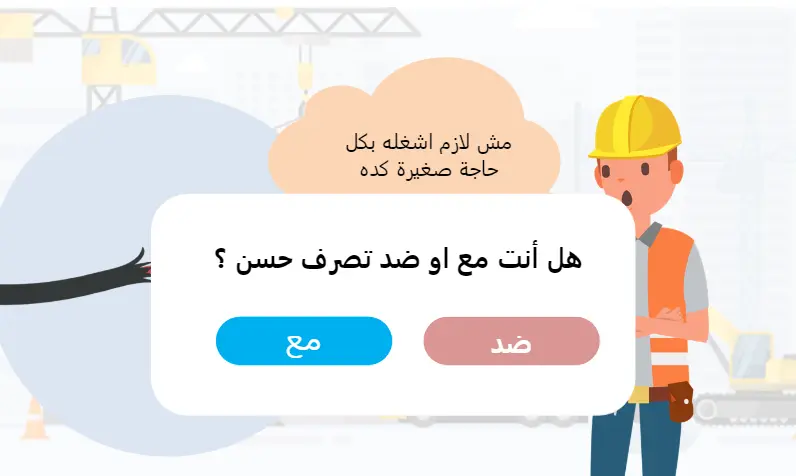
Imagine that you’re a worker who spots an exposed electrical wire. Do you inform your manager or ignore it? UMAMI branched scenario project for Elsewedy Electric puts workers in this situation. The aim is to see the consequences of their decision.
The 4th Theory:
Constructivism: Building Your Own Knowledge! ️🧱
Constructivism focuses on the idea that learners actively construct their own knowledge based on their experiences. In other words, they don’t just passively absorb information.
How can you use constructivism in e-learning?
♦ Activities & Simulations: Create opportunities for learners to apply what they’re learning through activities, simulations, and problem-solving exercises. This helps them make the knowledge their own.
♦ Self-paced Learning: Give learners control over their learning journey. Let them explore topics at their own pace and revisit them as needed.
The Takeaway: A Powerful Mix!
Remember, there's no single "best" learning theory for e-learning. The most effective approach is to combine elements from different theories to create a unique learning experience.
Ready to transform your e-learning strategy? Contact our experts now!