Discover the key elements for successful LMS training and how to optimize your learning experience.
Understanding the Importance of LMS Training
LMS training ensures that employees have the necessary skills and knowledge to effectively use the learning management system. By providing training on how to navigate the LMS, access course materials, and track progress, employees can take full advantage of the available resources.
When employees are properly trained on the LMS, they can quickly and easily access the training materials they need, reducing the time and effort required to find and complete courses.
LMS training promotes a culture of continuous learning within organizations. By investing in training and development opportunities, commitment to employee growth and professional development is clear. And it can lead to employee engagement, satisfaction, and retention.
Choosing the Right LMS Platform
Selecting the right LMS platform is one of the issues that face organizations.
With a wide range of options available, it is important to consider several factors before making a decision.
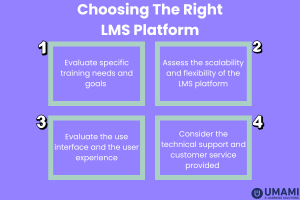
1- Evaluate specific training needs and goals. Consider the types of courses and content that will be delivered through the LMS, as well as the target audience. Understanding these requirements will help identify the features and functionalities that are essential for the LMS platform.
2- Assess the scalability and flexibility of the LMS platform. As the organization grows and training needs evolve, the LMS should be able to accommodate these changes without significant disturbance or additional costs.
3- Evaluate the user interface and user experience of the LMS platform. A user-friendly interface and intuitive navigation will ensure that employees can easily access and navigate the training materials.
4- Consider the technical support and customer service provided by the LMS vendor. It is important to have access to timely support and assistance in case of any technical issues or questions.
By carefully considering these factors and conducting thorough research, organizations can choose the right LMS platform that aligns with their training needs and goals.
Explore the 7 types of Learning Management Systems and find the best fit for your needs.
Define Clear Learning Objectives
It is important to define clear learning objectives. Learning objectives provide a roadmap for the training program and help ensure that the content and assessments align with the program objectives and goals.
Clear learning objectives help employees understand what they are expected to learn and achieve through the training. This clarity motivates employees as they can see the value of the training in their roles and responsibilities.
When defining learning objectives, setting (SMART) goals is important, by making goals specific, measurable, achievable, realistic, and timely, it ensures that the objectives are clear, actionable, and easily assessable.
Lastly, learning objectives should be aligned with the overall organizational goals and objectives. Aligning training objectives with organizational goals helps employees understand how their learning contributes to the company’s success.
Designing Engaging Training Content
Engaging training content captures and maintains employee interest and attention. When designing training content for the LMS, it is important to consider various factors to enhance engagement and learning outcomes.
1- Content is presented in a visually appealing and interactive manner. This can include the use of elements such as videos, images, and infographics. Interactive elements such as quizzes, simulations, and interactive exercises can also increase engagement and knowledge retention.
2- Content is organized in a logical and structured manner. Clear headings, subheadings, and bullet points can help employees easily navigate and comprehend the information. Additionally, breaking down the content into smaller, digestible sections can prevent information overload and enhance comprehension.
3- Content is relevant and relatable to employees’ roles and responsibilities. Using real-life examples, case studies, and scenarios can help employees connect the training content to their daily work and easily transfer learning to the workplace.
Implementing Effective Training Strategies
It’s important to use effective training strategies to ensure LMS training programs succeed and meet their goals. By adopting best practices and exploring different approaches, organizations can make their training efforts more effective.
Firstly, consider a blended learning approach that combines online and offline training methods. This can include a mix of eLearning modules, virtual instructor-led training, and in-person workshops. By providing a variety of learning opportunities, organizations can cater to different learning preferences and maximize knowledge retention.
Secondly, encourage active learning and learner engagement. This can be achieved through interactive assessments, discussions, and collaborative activities. By actively involving employees in the learning process, organizations can enhance motivation and engagement
Additionally, organizations should provide ongoing support and reinforcement after the initial training. This can include access to job aids, resources, and mentoring programs. By providing continuous support, organizations can ensure that employees can apply their learning to their daily work and sustain the knowledge gained.
Interactive Assessments
By incorporating interactive assessments into the LMS training programs, organizations can measure learning outcomes and identify areas for improvement.
Interactive assessments can take various forms, such as quizzes, case studies, simulations, and scenario-based exercises. These assessments not only test employees’ knowledge but also provide opportunities for them to apply their learning in realistic situations.
By providing immediate feedback and personalized results, employees can track their progress and identify areas where they need further development. This feedback loop promotes a sense of achievement and encourages continuous learning.
When designing interactive assessments, it is important to align them with the defined learning objectives. This ensures that the assessments accurately measure the desired outcomes and provide meaningful insights into employee learning.
By designing assessments that align with learning objectives and provide valuable feedback, organizations can enhance the effectiveness of their training initiatives.
Collaborative Learning Opportunities
By providing opportunities for employees to collaborate and learn from each other, organizations can foster a culture of knowledge sharing and collective growth.
One way to encourage collaborative learning is through discussion forums or virtual classrooms where employees can engage in conversations, ask questions, and share insights. This allows employees to learn from different perspectives and experiences, expanding their knowledge and understanding.
Another way to promote collaborative learning is through group projects or assignments. By assigning tasks that require collaboration and teamwork, organizations can enhance problem-solving skills, communication, and interpersonal relationships among employees.
Additionally, organizations can leverage social learning features within the LMS platform, such as chat functionalities or online communities. These features facilitate informal learning and networking, allowing employees to connect with peers, share resources, and seek advice.
Measuring Training Success
Measuring the success of LMS training programs is important for evaluating their effectiveness and identifying areas for improvement. By using strong measurement strategies, organizations can make sure their training efforts meet their goals and help the company grow.
One way to measure training success is through tracking metrics such as completion rates, quiz scores, and time spent on training. This data can also provide insights into areas where additional support or resources may be needed.
Organizations can gather feedback from employees through surveys or feedback forms. This feedback helps identify employee satisfaction levels and suggestions for future training initiatives.
Also, organizations can evaluate the impact of the training programs on organizational goals. This can be done through performance evaluations, assessments, or tracking key performance indicators (KPIs). By measuring the impact on performance, organizations can determine the return on investment of their training initiatives.
Final thoughts
LMS systems are essential tools in modern education and training. Our team of experienced professionals can assess your needs, provide personalized recommendations, and guide you through the process of enhancing your online learning experience.
Schedule your free consultation with Umami Learning today!